Showing posts with label Purpose. Show all posts

Saturday, February 04, 2023

Passion: The Driving Force Behind Success and Fulfillment

Prachi had always been searching for her true passion in life. She had tried many different things, but nothing seemed to stick. When she approached me to get support in her career, she spoke about her passion. She mentioned that she was a good dancer but was not sure about making a career in dancing. She also said that she likes writing and she can be an author and journalist in the media industry. I suggested her coach to identify her true purpose in life. 

Coach explained to her about passion and some myths around that. She was shocked to learn that many of the things she had believed about passion were simply not true. For example, she had always thought that passion was something you were born with, but she learned that passion could be developed and cultivated through experience and exploration.

Encouraged by this new knowledge, Prachi decided to start experimenting. She tried new hobbies and took on new challenges, and slowly but surely she started to discover what truly made her happy and fulfilled.

One day, she stumbled upon photography and was immediately drawn to it. She felt a spark of excitement and joy every time she took a picture, and she knew that she had finally found her passion. Prachi threw herself into photography, studying and practicing every day. She learned about the technical aspects of the craft, as well as the creative side, and she was soon able to express herself in ways she never thought possible. She started sharing her work online and quickly gained a following. People were drawn to the beauty and emotion in her pictures, and she was amazed by the positive impact her work was having on others.

Prachi's passion for photography led her to new opportunities and experiences, and she was able to turn her hobby into a successful career. She never forgot the lessons she learned about the myths of passion, and she was grateful for the journey that had led her to where she was.

Passion is often described as a strong feeling of excitement and enthusiasm for something, and it can play a huge role in our lives. Whether it's a hobby, a career, or a cause, having a passion can bring us joy, fulfillment, and a sense of purpose.

However, there are many myths and misconceptions about passion that can hold us back. Let's take a closer look at some of these myths and the reality behind them.

Myth 1: Passion is something you're born with

Reality: While some people may have a natural talent or inclination towards certain things, passion can also be developed and cultivated through experience and exploration. Don't be discouraged if you haven't found your passion yet – keep trying new things and exploring your interests, and you may be surprised by what you discover.

Myth 2: Passion is the same as a hobby

Reality: While passion can certainly be a hobby, it can also refer to a deeper calling or purpose that drives your work and life. It's not just about doing something you enjoy – it's about finding something that brings meaning and fulfillment to your life.

Myth 3: You can only have one passion

Reality: People are complex and multi-faceted, and it's possible to have multiple passions and interests throughout your life. Don't feel limited to just one thing – embrace your diverse passions and interests, and see where they take you.

Myth 4: Passion means never having to work a day in your life

Reality: While having a job you're passionate about can be incredibly rewarding, it still requires hard work and dedication. Passion is not just about feeling good – it's about making a difference and pursuing your goals, even when it's difficult.

Myth 4: Passion equals success

Reality: Having a passion for something is a great start, but it takes more than that to achieve success. Passion must be combined with hard work, dedication, and a willingness to learn and grow.

Passion is a complex and multifaceted concept that is often subject to myths and misconceptions. By understanding the reality of what passion entails, we can better pursue our interests and achieve our goals.

Please respond the survey, I am conducting, as a part of my research by clicking on >> Leadership Competencies required for managers while handling crisis situations

(Opinions are purely personal & does not represent my organizations, current or past) 

Author's books are available on AmazonFlipkartPothi and BookGanga. You can buy the print copy of Vitality in Human Resources on amazon. Click >> Vitality in Human Resource: Adding human dimensions in HR processes   

Saturday, August 28, 2021

Protective factors in life

Challenges and struggles are an integral part of human life. There are very few people who easily get what they wish for, however the majority of people have to stretch themselves and have to come out of their comfort zone. To live life and make it happy is an internal state of mind. There are millions of people who wake up early in the morning, go to their job, (now during a pandemic, log in on the computer while working from home), listen to their managers, get the job done. The reasons behind going to the job are different. Some People want to live a happy life by achieving more, some want to give the education to their kids, and some run for loans. Everybody chases their dreams. During this process, people get success and failure. People live with a big burden on their shoulders. Stress, work pressure bring disappointments and frustrations. Everybody becomes part of the rat race; they may not like to be the rat in the rat race, but they are unable to find another option. We are not rats; we are human beings. Unfortunately, very few people in the society have the right ecosystem to support them. The problem is that both success, and failures bring stress. The overall scenario is impacting mental health. Organizations are investing in their people to support them in their life, however is it enough?    

Image from internet
Finally, it is you, who has to take actions for your good life. How to do this? The best way is to find out those protective factors in our life. Protective factors are your defense system, in case your mental health is affected because of struggles and challenges in your personal and professional life. It helps you to bounce back in setbacks and to be resilient. We need to develop those protective factors in our life. Unfortunately, in the rat race, we forget to take those protective factors along with us. In fact, we totally ignore those factors. 

Those protective factors can be classified as under:

Social factors: Generally speaking, this is society around us. All of society may not be useful for you. Sometimes people don’t recognize your success because of their jealousy.  Jealous people don’t want to see you better than them. And hence it is very important to identify those relationships which would support you in case of setbacks and challenges. It includes relationships, family members, friends, teachers, coach, and mentors. However sometimes this also may not work. Hence many protective factors are out of the control. Your protective factor only works when there is the respect and unconditional intentions of the next person. Find out those close family members and friends to whom you can speak about your problem without any fear. Their ability to understand you will determine how effective they are. This also depends upon the level of support you are looking for. Parents, spouse, and children are natural protective factors and then comes your family and friends.

Coping skills: It is said that you are the first person to help you. This is your ability to manage uncomfortable emotions in a healthy way. Resilient is one of the skills which helps you to manage setbacks. Emotional Intelligence is the key part of coping skills. Ask the questions yourself, are you aware of your own emotions & feelings? Do you recognize the impact of the same on your behaviour?

Health: Physical health is very important. Proper exercise, healthy diet and enough physical activities including simple walk or cycling keep you fit. More you fit, the more your ability to manage stress, failure, and struggles. The benefits of physical activities are amazing. That’s why our ancestors told us, “Health is wealth.”

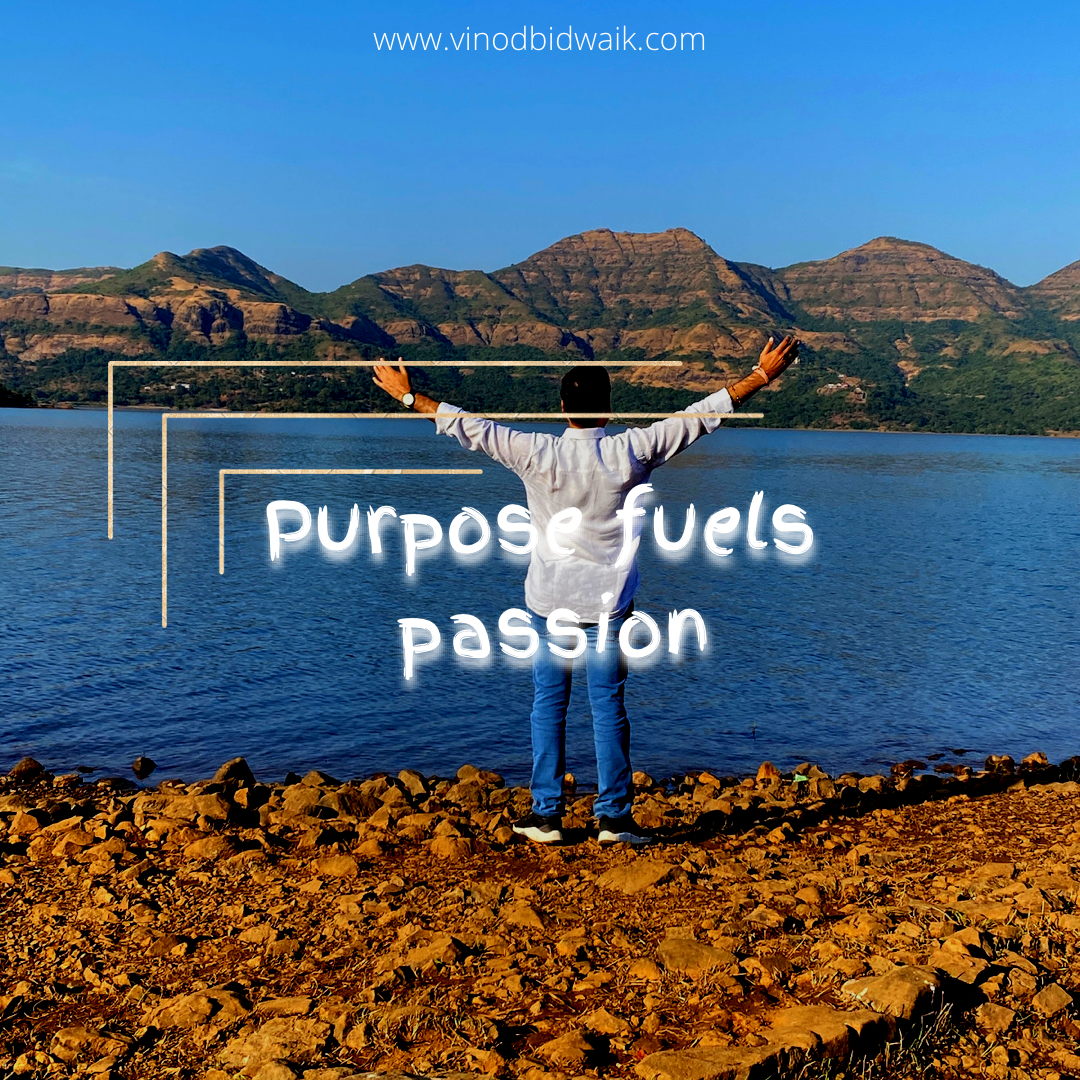
Purpose: It is the reason for being. If you have a strong purpose, your power increases, you become passionate and then struggles become tiny. This is a great protective factor in our life. Finding the meaning in life will help you fulfill the purpose and goals in life. We can’t live life as it comes. There should be the reasons you get up in the morning. If you have a purpose, it can guide life decisions, influence behaviour, shape goals, offer a sense of direction, and create meaning in life. The overall process makes you strong.

Thinking: Albert Einstein quoted, “The world as we have created it is a process of our thinking. It cannot be changed without changing our thinking”. You become what you think. Healthy thinking is one of the protective factors in your life. We all are the victims of cognitive distortions. Every event in our life triggers irrational thoughts in our mind. Those thoughts influence our behaviour. Everybody experiences those thoughts but if it is more extreme then, it is harmful for us. Identify those irrational thoughts. Think how you can use your strengths and weaknesses rationally in life. Thinking clearly by understanding different biases, irrational thoughts will make a stronger self.

There is another protective factor like hobbies. Hobbies give you energy. Pursue your hobby and make life easier.

Check the level of those protective factors currently you have and make your plan to make it stronger. Remember the stronger your protective factors, stronger you are. Protective factors are your immune system which helps you to keep you healthy mentally. 

(Opinions are purely personal & does not represent my organizations, current or past) 

Author's book are available on AmazonFlipkartPothi and BookGanga. Income from books is used for social cause. 

Sunday, April 11, 2021

My three leadership lessons in 2020

HRTales asked me my top three leadership lessons during 2020 and I responded as follows. 

Year 2020 was a learning year for everybody. VUCA was the most abused and used jargon in the corporate world.  However, we all learnt the actual meaning of VUCA in 2020. In fact, it was a great leadership lesson.

My first lesson is 

In a crisis situation, leaders are in the line of fire from various key people in the ecosystem, customers, government, employees, stakeholders, society and political leaders. These all people may have unrealistic expectations from the leaders. This brings tremendous stress and possibly the leader may make mistakes. In such a situation, leaders need to be courageous and confident. When your employees and customers are watching you, you need to demonstrate the behaviour where they should feel comfortable working with you. By demonstrating courage and confidence, you drive the right behaviours in your team too. This includes taking a calculated risk, saying no at appropriate time, taking care of employees and simultaneously focusing on the business continuity.

Second Learning is

Leaders too have their weaknesses and blind spots. The maturity is when we recognise those weaknesses and blind spots and be vulnerable. During the pandemic we all were struggling to find the solutions to different aspects like, converting the office into home offices, motivating employees, handling infections and health issues of family and teams, customers not honouring the contracts, loss of revenue and poor cash flows. The situation was so unique that there was not one fit all solutions. In this process, i learnt that as a leader, we also have vulnerability and it is okay to admit our blind spots and lack of knowledge in certain areas.

My third leadership lesson is

Purpose, values and creating the trust capital is crucial. We understood the value of relations, human interactions, social life and also understood that we have very little needs, if we manage it properly as we did during the pandemic. Such feeling takes you to the purpose in life. As a leader, one of the imperative is to give the larger “purpose” to the team, work on the values essential for survival in business or in personal life and create the trust capital in the organization. Build the trust during good times, so that you are not alone during a crisis situation. As a leader continuously invest in building meaningful relations with employees, customers and other stakeholders in the ecosystem. You can use this trust capital to set the directions, get the alignment and commitment from employees and other stakeholders. 

Author's book are available on AmazonFlipkartPothi and BookGanga 

Vitality in Human Resource is now available in paperback edition. Please click here to buy

Buy Industrial Relations Strategy Framework For Every Manager on amazon. Click IR Strategy Framework.

Saturday, October 31, 2020

Purpose 3: Make your job more meaningful, it is in your hands.

There are millions of people who go to the job daily. During covid19 they are still working; the office location might have changed to home. Among them millions of people lost their jobs because of the pandemic and economic turbulent. Are those organizations too fragile that they could not sustain and were unable to retain their employees? On the other side, organizations approached employees, communicated the consequences, took them in confidence. They exercised cost measures but not asked employees to leave.

That is the difference between “living with the purpose” and just “speaking about the purpose”.      

On the other side, who are those who lost their jobs? Were they bad? definitely not, but unfortunately, they might have chosen the wrong organization? For a few, it might have the right organization, but then why were they in the exit list?  Were they not fit?  Or were they fired because of just cost issues? There are a lot of questions. 

Once people get the job, they look for the compensation and then they look for more compensation. They compare with their peers and friends and then they change jobs. Sometimes they make excellent progress, sometimes not. During this process few people get the insight and find their purpose. However, most of us just perceive our work as a job. This is called a “Job Mindset” where employees perform all types of transactional duties for getting the compensation. You attend duties for a particular time and you get paid.

There is another set of people who have a wider spectrum of their visions and they focus on the career. This is a “Career Mindset” where they focus on expanding their career by advancing salary, title, power, team size, and/or span of control. They become managers, few of them also become business leaders.

Third mindset is employees who find purpose in their career. They ask why? Why am I doing this? For money, for career or for making the impact and bringing the difference in the organization, life of the people and surrounding? They are creative, passionate, innovative and committed to a meaningful job and engaging workplace that benefits all stakeholders. This is called the “Purposeful Mindset”. When we find the purpose, then it is easy for us to decide the next course of action.   

When you focus on the job and career. Sometimes you as an employee are aligned with the organization, sometimes not. But imagine where you find the role and organization which is totally aligned with your purpose. Working for the cause about which you are passionate makes life enriching and happy. Further results will be amazing.

We all think about the job and then career, but very few reflect on the purpose. If you are able to find out the purpose in a day to day job to make it more interesting, more meaningful and having a positive impact on others, then you are excelling towards finding your purpose. By doing this you are insulating yourself from redundancies and insecurities, but to do this, you need courage, curiosity and conviction.  

Please read the print replica of my latest book written for leaders on amazon kindle, Vitality in Human Resource: Adding human dimensions in HR processes

(Opinions are purely personal & does not represent my organization)     


Sunday, October 18, 2020

Purpose 2: Do you align your purpose to the larger purpose?

We understood the personal dharma (purpose). At the individual level it is very easy to follow if values are strong. However, when you are dealing with different people in the society, colleagues in office, it is very difficult to live with values. Every human being has a different value system. Their foundation may not be that rock strong. There are compromises and adjustments, however questions remain to whom and with? And to what extent.

Now imagine the situation, where your purpose is not aligned with those you are dealing with in your day to day life; you will be in an ethical dilemma.  

There are people who personally are very strong on their values, like being vegetarian, or following non-violence and not hurting anybody. They follow all rituals and are very religious. According to them they follow the Dharma, but they are in the business which is the total opposite of their values. The same person may have the business of gutkha manufacturing or meat processing. We have seen businessmen who have spoiled the whole generation by selling gutkha in India. People justify this by arguing that personal values are different and business values are different. Some may say that I am clean in my personal life, but my business is not clean because that is for my survival. Now imagine you working with them, what impact you will have in your personal life. The question is not about the alignment here. I call this hypocrisy. There is no meaning to the individual values in such hypocrisy.    

Research says that when there is a positive correlation and intersection of purpose between our lives and our work, the results are beneficial for both and society at large. It means when we align our individual purpose with our job purpose, or work, then there is a positive impact on both & the society at large. Millennial or Z generations are looking more towards the purpose nowadays and they strongly believe that they care for the community and society at large, including the way profits are made, the impact on the people and planet.

I believe that the business should not be viewed simply as a medium of earning or generating wealth. If work is to make a life, as famed management guru Peter Drucker once suggested, the purpose of the organization needs to shift to include a greater degree of meaning. Thus, purpose ought to be felt and achieved at work as it is in the rest of our lives.

So, corporate leaders, political leaders need to work on creating such a purpose driven ecosystem. (I may sound dreamer when I include political leaders here, but when citizens, mainly youth, become more aware, they force political leaders to change.) If this occurs, individuals’ work roles can contribute to their ability to truly then make a life.

Please read the print replica of my latest book written for leaders on amazon kindle, Vitality in Human Resource: Adding human dimensions in HR processes

(Opinions are purely personal & does not represent my organization)

Sunday, October 11, 2020

What is your Dharma?

The Purpose

The purpose of human existence is always debated. When we are frustrated, in dilemma, in struggles, we tend to think more about the purpose and meaning in life.   

In Hindu philosophy, the purpose of human being is nicely explained. Purpose of life is to achieve four aims in life. Those are Dharma (moral values), Kama (pleasure, love), Artha (prosperity) and Moksha (liberation). Hindu believe in leading a righteous life and achieve liberation finally. Every human being has their personal Dharma.  However, it also believes in pleasure and prosperity. These are different stages of life. Few find the purpose in early stages and work on spiritual liberation. It is always expected that humans should make morally right decisions in order to achieve good karma. Karma explains the impact on the personal life of different deeds human beings do. Sometimes it has positive and sometimes negative consequences on life. It believes that every action has the reaction; You get back what you do with others. So, the purpose in different stages may differ but the final purpose is to be happy. Once your full potential is achieved, your life is fulfilled, and you are happy. 

Greek philosopher Aristotle also believed and taught that human beings were driven by purpose, autonomy, and the natural desire to seek out and understand the truth. A person’s ideals manifest when they are pursuing and then attaining a life of purpose, ultimately the end state of human well-being. This end state is sometimes referred to as eudaemonia, the Greek word for human flourishing. 

As per the priority we work and satisfy our different needs. Maslow in his theory explained different human needs and finally explained “self-actualization” which is higher human need. Everybody needs to ask, “What is my Dharma & purpose in life?”

Lot of research explains that human need is to find purpose and if the purpose is found, life is easy and enriched. The team of Harvard School of Public Health researchers finds that if you feel, you have a higher sense of purpose in life, defined as having meaning, a sense of direction and goals — you are more likely to remain healthy and physically strong as you grow older. (Eric S. Kim). Similar researches are conducted by different researchers globally and findings are similar. If you have the purpose, you are more successful, you are happy and fulfilled and live long. 

In human history, every generation had their own struggles, but they adapted to the situation very well. They found the purpose. Today we can live an easy life because of great inventions by scientists, we have witnessed great artists and leaders. All those made the difference in the world by finding their purpose. They have done this for human beings, but they also lived their own accomplished life. However, sometimes human beings are too emotionally connected with certain materialistic things and relations where the person ignores the purpose. In such conditions, internal conflicts are inevitable which finally impact the peace of mind.  

Finding the meaning in life will help you fulfill the purpose and goals in life. We can’t live the life as it comes. There should be the reasons you get up in the morning. If you have a purpose, it can guide life decisions, influence behaviour, shape goals, offer a sense of direction, and create meaning in life. 

So? What is your Dharma - The purpose?  

Please read the print replica of my latest book written for leaders on amazon kindle, Vitality in Human Resource: Adding human dimensions in HR processes

(Opinions are purely personal & does not represent my organization)

You may also like these.. please read