Showing posts with label My story. Show all posts

Monday, February 07, 2022

Vaccination

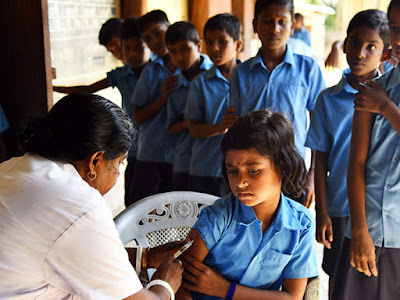
Everybody speaks about vaccination unlike earlier days. Thanks to Covid19. However during my childhood vaccination drives were painful events. Mostly such drives used to happen in schools and innocent kids were the victims. My school was not different. Every year, government medical officers and their staff from the district place used to come for the drive in our school for different vaccinations.

Parents were not aware about the necessity of timely vaccinations. The government was playing this role. When those doctors were coming for vaccination drives, it was a different atmosphere around. Few students were tense, few were happy; Tense because of the fear of injection and happy because of breaks to classes.  From then on, we understood the meaning of the phrase, "Tears of joy in one eye and tears of sorrow in the other." however both eyes used to fill up with tears. Afterall we were primary students. Some of the children would cry loudly just sensing the next action of doctors. Few would demonstrate the courage to say, “What am I afraid of?” However the whole atmosphere used to be serious overall. Glass syringes and needles would start boiling in water. I am sure there will be no difference between the state of mind of the goats who were dragged by the killer.

Reference Image from the internet

The doctor used to rub the spirit on the arms with a smiling face, sometimes with a serious face. And a needle would be inserted inside. In the first, the children would scream in pain, some would just shed tears, while some strong children would pretend to be brave. It was like a war-like situation where small kids were fighting against their common enemy which were doctors, nurses and assistants. I was also among them. 

Once during such a vaccination drive, my father was passing by near the school. Out of curiosity, he peeked into the school to see what was going on inside. When I saw him, I started crying. I had held the tears, but after seeing him my eyes were tearful. Seeing that, he came straight inside, picked me up, wiped away my tears. My father's reassuring touch and words made me run away from my fears.

Parents do not want to see their child's tears. I remember, despite my wife being a doctor, she had tears when my son was pierced for blood for the tests. We may not realize the importance of our parents and their caring for their children. We realize that when we become parents and we start missing our parents. Take care of them when they are with you today. 

(Opinions are purely personal & does not represent my organizations, current or past) 

Author's book are available on Amazon, Flipkart, Pothi and BookGanga. You can buy the print copy of Vitality in Human Resources on amazon. Click >> Vitality in Human Resource: Adding human dimensions in HR processes    

Royalty from books is used for social cause. 

Sunday, January 30, 2022

Pen

It must have been eight o'clock at night. There was a terrifying silence around. The sound made by night insects was irritating. One bullock cart passed by. The sound of a bell ringing in a bull's neck could be heard in the middle of the distant road. The reflection of the crescent in the sky was visible in river water. A little wave was forming as the fish moved in the water. Smoke billowed from the earthen stoves in the distant houses could be seen. Some lights were seen flickering.

I was sitting alone on the riverbank outside the village for about an hour. Time was running out and my mind was full of thoughts. I was convinced that no one in the family loved me. Although it was a little late to go home, my worried parents did not come to search for me. 

Now I was slowly getting hungry. I started to miss my elder sister very much. She got married six months ago. If she had been home today, she would surely have come to find me. She loves me very much.

I didn’t know what to do. I started thinking whether I should go home without waiting for anyone. But how was it possible? With great courage, I had left home after being angry with my mother. If I had gone back home easily, my 'ego' would have been horribly hurt. I was expecting that my mother would come or send somebody to find me. 

As time went on, my patience was running out. I was feeling that I would starve to death. Hunger, disturbing silence and the terrible surroundings made me cry.  “Let's go home.  Mother must have cooked a meal. Let's eat that and come back again.” My mind told me. Finally I came to the conclusion that I have made a mistake by being angry at my mother and leaving home at odd hours.  

You must be curious why I was brooded over the mother? Right? 

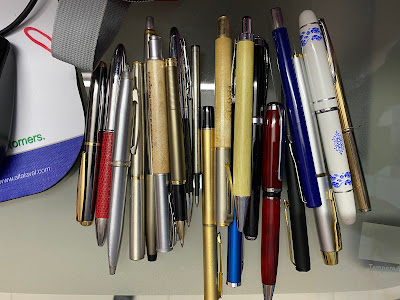
It so happened that after coming home from school, I asked my mother for a new fountain pen. I had a pen; however the nib of that pen was worn out and the ink started oozing out. Some of my friends had nice pens. Seeing that, it was natural for me to dream of a new pen now. Mom asked me to change the nib and run on the same pen for a few more days.

“We'll get a new pen next month,” she said. But I wanted a pen right away. Of course, the old pen could have been pushed for a few days. But I persisted. Finally, mother declared that I would not get any new pen. 

I got disappointed and I said, “If you don't give me the pen, I'll leave the house.” 

She responded back angrily, “Are you blackmailing me? I will not tolerate your behaviour. If you wish to leave a home, you may.”   I felt bad and I went straight out of the house.

After a while, I heard a known call.  He was my father. I saw him and ran to him without much hesitation. My father looked at me angrily for the first time. But then he got mellowed down when he saw my face.

“Let’s buy a pen.”  He took me to the market which was across the river.

When I came home, I hugged my mother. She was angry. "Few things shouldn’t be pushed beyond," she said. “Did I say that I will not buy a pen for you? I was going to give a pen, right? But you were to adamant.  It was too much to leave the house for such a petty thing.”  She said,

“Sorry mother.” I wiped my eyes and sat down to study.

Today I have many costly and different types of pens. Pens sold in any shop attracts me and whenever I see any different type of pen, I can't resist buying it. However the pen purchased by my father on that day is not comparable with any pen in the world.  

(Opinions are purely personal & does not represent my organizations, current or past) 

Author's book are available on Amazon, Flipkart, Pothi and BookGanga. You can buy the print copy of Vitality in Human Resources on amazon. Click >> Vitality in Human Resource: Adding human dimensions in HR processes    

Income from books is used for social cause. 

Sunday, June 13, 2021

Experience failures and learn the success formula

One of the questions professionals, business leaders, entrepreneurs etc always get is, “What is the success formula you used?” It is assumed that most of the successful people have planned their career and they got what they dreamed for. We always share success stories of professional, entrepreneur, leaders but we never share failure stories. We forget that the success stories which you read or listen to are hardly 10% and there are almost 90% failure stories. 

You can learn from success stories but you can learn more from failure stories.   

After the graduations, there were very few employment opportunities. Initial days were tough for me and my generation. I was doing small jobs only to get some money. I was not enjoying those jobs. My bosses were terrific, my employers were not that good. Others were getting good jobs and good salaries. I was thinking, I was a failure, alone all the way. However, I always learnt whatever came to me. I learnt so many things, I learnt dealing with difficult people, I learnt to work hard, I worked till late night. Though the jobs, managers and employers were difficult, my family members, colleagues and friends were good. Till late night we used to spend time and have fun mimicking others. We shared the same bonding, same emotions. We used to share  food and borrow money from each other.

They were the same as me, living in a small house, their struggles were not different, they also needed their jobs to keep going. In fact, they were much senior than me and had a lot of family responsibilities.

I learnt a big lesson from them, and that is keep going…

I was also trying to get a good job with a good salary. I was rejected by a few companies because of various reasons, like bad English, lack of confidence, or just my poor presentation skills.

Failing one time or even several times doesn’t make you a failure any more than losing one game makes you a loser. Failure can be a great teacher, great mentor. Failure makes you stronger. Failure keeps you grounded.

I became stronger day by day. It kept me grounded and humbled. I was among those youths, who perhaps would get frustrated, disappointed, depressed but I was different from them and that is I never took failures personally. I learnt lessons from each failure.

All my failures taught me followings:

Being grounded and realistic: I was expecting too much from me. I wanted to be successful fast without understanding my limitations. If English is the hurdle to get a good job, I learnt English. I spent sleepless nights watching English shows, news channels, reading newspapers and books to develop the English language and vocabulary. Whenever I used to learn any new English word, I used to write it in a notebook. I  used to make sure to use that word during the next conversation. With the permission of my employer, I took another job in English Daily to edit their late night editions. I made mistakes in the language that I learnt daily. This helped me manifold. I learned language skills; I improved my vocabulary; I gained knowledge on multiple subjects.  

Not taking the failure personally: Failures are because of circumstances and some limitations we have. Human being is not perfect. Failures reminds us that we are human being. I used to get disappointed and frustrated because I used to take the failures personally. My emotions were not in control. I always used to blame myself and my background but then I realised that problems is not always with me. People are also unfair and political. Sometimes situations and time is unfair. It is just not the right time. So instead of taking the failure personally, I started to reflect upon the reasons. This made me stronger day by day.

Self-Image: Failures are inevitable but during this process we need to learn but also take care of self. Keeping a positive self-image is very crucial after failures. I learnt not to blame others but also not to blame myself. We should learn from failures and mistakes and be optimistic about the future. This helps me to gain confidence. I started not to think much about the failure events, instead focusing on next.

Never give up: Most people fail before achieving success; the difference is that successful people never stop trying. I always used to tell my mind to keep going. I took inspiration from others, I always used to observe those poor people who were struggling even to maintain their livelihood. That gave me the positive feeling that at least I have something in hand.  

Somebody rightly said, “Age wrinkles the body. Quitting wrinkles, the soul.”

Mediation, hobbies, and fun: Disappointments and failures never took my heart and mind from me. I used to visit temples regularly and sit there. I remember going to the ‘Lord Mahadeva’ temple which was located outside of the city. I used to sit there and meditate for hours. I read a lot of books, all types of books, books in Hindi, Marathi English. I listened to songs regularly. I spent time with my friends sharing stories and also helping them. I attended a lot of seminars and lectures on different subjects during and even after my college days. I also attended a lot of cultural and social activities. I also started writing columns for newspapers and magazines.  Even during the odd times, I laughed loudly. I never allowed my smile to disappear. I started to mentor young children and college students on personality development. All this has a positive impact on me. 

At present, I have all those things which I dreamed of. I have no fears and insecurities. But I went through the hottest fire in the past which made me stronger, curious and courageous.

Richard Nixon once said, “The finest steel has to go through the hottest fire”. I learnt resilience.

One piece of advice I always have is that “be like a sponge. Absorb good and bad, but learn from those.”    

(Opinions are purely personal & does not represent my organizations, current or past) 

Author's book are available on Amazon, Flipkart, Pothi and BookGanga 

Vitality in Human Resource is now available in paperback edition. Please click here to buy

Buy Industrial Relations Strategy Framework For Every Manager on amazon. Click IR Strategy Framework.

Saturday, March 06, 2021

Sailboat and Life Journey

Once, I met a very successful person during one of the programmes. He was holding a great position in the multinational company. Normally when you meet such people, they give you a different perception. They ignore you; they feel superior to you and they carry the pride on their collar. They carry their attitude with them. They name that attitude as an executive presence. They carry the title they hold with them and flaunt it. Content is immaterial for them. They are respected because of the organization and their position.

However, the person to whom I met was totally different. He was well known in the professional sphere. He was genuine and authentic. He was a humble and kind person. You can see the honesty in his eyes and feeling of self- fulfillment on his face. He was very much comfortable while speaking with others and making others comfortable with his smiling look. We exchanged business cards, started interacting regularly and became good friends.  

Once I asked him, “Everybody would aspire to become like you. You are holding such a big office of the organization, still you look so cool.”

He replied, “The organization, the position I am holding is not permanent. It will go away on any day; I want people to know me for my personal qualities and not because of the organization and position I hold.”

I realized that he never shied away to tell if he didn't know something. He believed in “knowledge is the king.” He was respected for his knowledge along with his role, however still he used to listen like a student. Perhaps he might have known a lot of things, but he always gave the feeling to the next person that he was listening to him for the first time. This is an amazing quality, I must say. Most of the time, we have a comment or opinion when we know something. We tend to interrupt the conversation in such situations.        

He mentioned, “Our life is like a sailboat.”  

After looking at my confused face, he said, “Sailboat metaphor attempts to address human functioning from a holistic perspective, taking into account the many factors, both positive and negative, that influence well-being and fruitful life for self and others.”  

“Now you confused me more.” I said,

“Let me explain to you.” He took a pause and said, “Normally sailboats symbolize journey and adventure. Our life is not different from that. Right?”

I nodded in agreement.

“When we sail the boat, means when we live the life, there are different elements of that.”

“Like?” I asked.

“Like? Like, Sailboats sails on water, water in our journey means reality, the situation, the circumstances we live in.”

“Sailboat has a steering wheel; it means directions we want to take. These are also our wants, the way life we live, values we follow.”  

“This is interesting.” I was curious.

“Of course, indeed, we have our aspirations, destination in life. Sailboats are not waterproof always, possibly there are a lot of leakages. Those leakages are our shortcomings.”

“And?

“Be patient, I will explain to you other elements as well, but let’s order coffee first,” He waived towards the waiter. Waiter was busy with another customer who was scolding him for some reasons. The waiter was patiently trying to calm the customer. He politely offered him something. The customer looked relieved. After a few minutes he came to us.

“Sorry sir, we have some issues with deliveries. Shortage of manpower.” He smiled.  

We ordered coffee and some snacks. After a few minutes of pause, our conversation started.

“Did you observe the irritated customer at the next table and the way this guy managed the situation?” He asked me.

“Yes,”.

“There will always be uncontrollable situations, everybody has some strength to deal with those situations. So, when you sail the sailboat, weather is another element which resonates to uncontrollable circumstances. Weather can spoil your journey. However, Sailboats have sails which navigate as per the weather. Every human has their sails, i.e. strength.  and if you have a sail and use those sails properly you can navigate easily in any unfavourable situations. Same as that waiter did.”

Meanwhile our coffee and snacks were served.  

He continued, “Every sailor has their compass with them. We also have this with us. Internal feedback, feelings, emotions, intuition are those compasses for us. And finally, there are other sailboats in the sea and those are other people, peers, family members and friends. Sometimes they support and sometimes not. You have to establish a relationship with them. During the journey you have to take the right people with you”. 

“Mind-blowing sir. This is an amazing way to explain things.” I stood up, raised my hands and bowed in front of the great wise man.  

He smiled, “In the journey of life, I use these elements to make my life meaningful”. 

“Inspiring!” I said.

“At this moment, snacks and one more coffee are the most important elements of our life.”  we laughed. 

We continued our conversation in detail. It was my unpaid mentoring session with the great leader of the industry. 

(The story is written by Vinod Bidwaik, based on the concept of sailboat developed by Alberts, H.J.E.M. (2016). The Sailboat. Maastricht: Positive Psychology Program)


Author's book are available on Amazon, Flipkart and BookGanga 

Saturday, February 20, 2021

Accident, crisis, and communication

I have a habit of walking around the workplace at least once in a day. There are two reasons, one, you meet people, greet them, and get connected and the second reason is, you come to know what’s happening on the ground. Sometimes people share a lot of things while moving around. 

While working at factories, I used to walk around before resuming the work. Daily, I used to go to the shop floor, meet and greet workmen and supervisors working there. I used to question and challenge them if I observed some issues on the shop floor. During such rounds, workmen used to be attentive, at least they used to show that they are doing something. During one of the meetings, one of the senior managers who was an expat, gave this example to other managers. He was on the assignment on the improvement & productivity projects.

“I have seen, nobody bothers even when other managers and even the production head is on the shop floor. Workmen still continue to waste their time. But when Mr. Bidwaik is there everybody becomes more active because he challenges them. Workmen have taken granted for other managers.” He mentioned. I was involved in the change management, culture building process and productivity improvement project. The workmen, staff and managers were in their old world. Resistance was always high, not even from workmen but from white collar employees also. Being in HR, it was a totally different experience for me. The big challenge was on behavioural based safety. People used to take the shortcuts, not that much serious about wearing PPEs.    

It was a winter; the outside climate was amazing. I completed the round, it was a good walk, almost 4 km in the compass and shop floor. I went into my office, while I was unlocking my laptop, my intercom ranged. The production supervisor of one of the sections was on the line, “Hello Sir, please come on the shop floor immediately, one of the workmen had an accident.” He told me. I disconnected and rushed towards the incident. I saw a big crowd. The workman was under the roll of conveyor belt which had the weight of almost 600 kg. He was using the crane to move the newly manufactured roll of the belt at another location. The pulley tilted and the whole roll came out and fell on him. He was screaming. It was my first time to see such a horrible accident. Meanwhile an ambulance came. We took him to the hospital. His spine and vertebrae were damaged. His condition was critical. His family was communicated. 

I was shocked to see his condition. I updated this to the CEO, government authorities and senior management. It was decided to admit him in a specialty hospital in Mumbai. I was with him almost daily to support him and his family. During this process, I had to accompany senior leadership to speak with authorities. Dealing with locals, family members and unions naturally came to me. He was operated on 3 times and it took almost one year for him to recover from this accident, however he could not do the activities which he used to do earlier. We decided to transfer him to the back office. 

This incident was a lesson to all, company, managers, and workmen. They took safety seriously after that, but somebody had sacrificed to realize the same. Today whenever I see any unsafe behaviour, I interrupt the person and take his class. 

Safety is one thing, but I also learnt one of the elements of leadership. Leadership is about role modelling and reinforcing the right behaviour. This is one of the weaknesses of those managers and supervisors. Nowadays, MNC organizations have a strong safety policy and promote strong safety behaviours.

For me that accident was the test of my leadership skills, while dealing with that workman, family, relatives and of course union office bearers. It was a roller-coaster of all types of emotions. 

"It is true that turbulent times build great leadership skills."

In 2015, After almost 14 years of that incident, I attended the programme on communication during the crisis, conducted by one of the ex-BBC reporters. The learnings were as under,

  • Gather the facts, don’t try to cover up,
  • Tell the truth and be open,
  • Communicate the action plan,
  • Say, your priority is to take care of the people,
  • Speak about how the investigation is going on, communicate only facts,
  • Offer all support to government, police, and regulatory bodies,
  • While doing this, use appropriate words, very clear communication and don’t use the words like I think, I assume etc. Hence preparation is the key.

In the above incident, our managers and I had to face local authorities, police, local citizens, and families. I was not trained to handle this, but when I look back and recollect that incident, I must say that I learnt a lot and that is unimaginable.

Author's book are available on Amazon, Flipkart and BookGanga 

Sunday, January 31, 2021

It's not always about power

Last week one of the former union committee members working in my one of the earlier organizations called me. We used to call him DC that time. We reconnected on Facebook, exchanged numbers and we got reconnected. He is retired now. During the discussion we discussed our old days. We recollected our memories about the organization. He was very aggressive and one of the strong members of the union. The union was affiliated to the strong political party. The central union had assigned one of the secretaries to the unit of our factory. He was an uneducated greedy chap always expecting gratification in exchange of maintaining the better industrial relations. However, as a multinational company, we had a code of conduct and it was not possible to entertain him. Good part was our workmen were cooperative though they were resistant to the changes and new practices. 

During this period, I was using the framework called CCDP technique, which means Culture, Communication, Directions and Power. (I have explained the framework during one of the panel discussions. Please read the report and the framework). I had presented this framework along with actions and results the organization got in one of the conferences in 2002 and it was recognised very well.

DC was committed to the workmen’s cause. Other members used to put him in front for the confrontation. He was genuine and spontaneous but non-political. Sometimes your good character is the weakness in some circumstances. Because of his nature he was always on my radar.

During 2003, the central body was sacked by the party supremo. New body was inducted. Our local union unit also got a new secretary to coordinate. We decided to give the presentation to the central body about the organization, challenges we were facing, the resistance of workmen while implementing new initiatives etc. We also wanted to give the economic challenges, cost movement of raw material and why we need to be productive and capable. Our sourcing head, Pankaj, supported a lot to make the story convincing.

Before starting the meeting, DC stood up and asked the permission from the President and Secretary to address his grievance. I thought now, DC is going to derail the discussion.

He said, “Bidwaik Saheb, (sir) has not consulted us while making the presentation and we as a committee member are not aware about what he is going to present. Hence, we will not agree on anything, what he is presenting.”

The President of the central body just said, “Let him present. We will see later what to do with that.”

I put my points on behalf of the management. After the presentation, the president asked DC, “What is wrong in this presentation? He presented the data and facts. It is good to know the organization, the story they have. If you have better arguments let's discuss this.”

DC got upset but I was relieved by the response of the central body. It made our job easy to engage them further. However convincing DC was a major challenge. Transparency and genuine interest in the person make your job easy. I did the same. I was always open with committee members, afterall they were our employees. I was educating them about the consequences of their actions. I could implement a lot of change management initiatives afterward because of their support.  

(Opinions are purely personal & does not represent my organization)    

Author's book are available on Amazon, Flipkart and BookGanga 
(Income from books is donated to the NGO which works for orphans, street children & abandoned elders)
Saturday, January 23, 2021

Anecdote of joining the new company

I was standing in the balcony of the flat in the colony built by the company. I was a bachelor. The flat was too big for me. It was a beautiful colony on the riverbank of river Kundalini near a small village at Roha, Raigad. 

I was hired to head the Plant HR of a newly formed joint venture company. Indian company became MNC immediately after JV was declared. I was young, dynamic and in my thirties. Next day was my formal joining in the company. Company wanted somebody young, energetic and with progressive mindset handling both Industrial Relations and Human Resource function at the plant level. The union was affiliated to the regional saffron political party. Task given to me was to implement the global productivity and HR practices. Of course, this opportunity was great, and I was lucky to get it at that age.

That was a new town for me, however I was happy that I had a great opportunity which would keep me engaged for a few years. 

In front of my flat there was a lawn and big ground with big palm trees around it. Few children were playing there. Few of them suddenly saw me and waved their hands towards me. I reciprocated the same. 

Next day, I was waiting for the company car which was supposed to pick me up for the factory. The distance from the colony and factory was hardly 4 km. While I was waiting, one of the employees came towards me, introduced himself. After exchanging greetings, he asked me. “Are you closed to any board member?” 

“No, why?” I replied. 

“I thought so.” He replied. 

Meanwhile, I rushed towards the car. His question started cropping in my mind. Why did he ask the question? What makes him believe that I am closed to board members?”      

Next day during the orientation, I was introduced to the Production Head. After the formal discussion about his function and his challenges, we took the break for lunch. We started discussion on other topics like weather, places to see in the new town, beaches around the place, family etc. He had a daughter which was in 7th standard and son in 9th standard. Then he shared the anecdote about me. He told me that I was in a discussion for the last few days after my organizational announcement and people had created a lot of stories around me.   

The previous day, While I was in the balcony, his daughter and a few children saw me. She pointed the finger towards me and told the other children, “New HR Head, Mr. Bidwaik and family have arrived perhaps. See his son standing in the balcony.”   

Announcement of my joining was already done in the organization. Most of the employees were aware that some, Mr. Vinod Bidwaik is joining the organization. They were curious to know me. Everybody had constructed my image in their mind based on their previous experience. 

My predecessor was an ex-navy officer. He had put down his papers after the company decided to enter the joint venture of a one-time successful company in reinforced rubber compounding products. 

Everybody was thinking that the new HR head must be very senior, perhaps in fifties like earlier managers, however when they saw the young lad of 29 years, they could not believe that their HR Manager is so young. I got the answer why that employee asked me the question about my relations with the board member. He could not digest that the HR head is so young. Perhaps he thought that I must be the relative of one of the board members, that’s why I was hired to lead the HR function of such a big plant.

(Opinions are purely personal & does not represent my organization)    

Author's book are available on Amazon, Flipkart and BookGanga 

(Income from books is donated to the NGO which works for orphans, street children & abandoned elders)

Saturday, January 09, 2021

It’s all about the ideology

It was mid-year in 1997. I had just joined the organization as a Management Trainee in the Personnel department. It was a heavy engineering company having the union affiliated to a left political outfit, militant and with illogical leadership known for disturbing the industries around. When I joined the organization, I was shortlisted for managing recruitment for diploma and engineering graduates and training them for the assembly line. Rule was simple. You hire trainee diploma engineers, train them and put them on the assembly line. You hire engineering graduates to supervise them or to work in quality control or some better job. Because of the nature of the job, the attrition in those trainees was high. So, my job was to keep filling the pipeline of those trainees. There were few lucky chaps who would get the permanent letter of the employment. Was this practice professional? I will say it depends upon the perspectives.         

When I joined, I came to know that there are some issues on the machining shop floor with union. The settlement was due for a long time and the union was pushing hard on their demands. I never realised that I would be the part of the team handling the industrial dispute and participate in negotiations further with the little experience I have. We had a team who used to manage discipline and industrial issues under the leadership of the Personnel Manager.        

I don’t remember the day, but one morning when I reached the factory, I saw the large gathering at the security gate. They were workmen but also the workmen who were from different industries around. They were waving red flags and shouting slogans against the few people in the management. I could not enter the gate. Somebody from the workmen noticed me. He took me to the leader. Leader asked me my name. I told my name and then he shouted the slogan against my name. I somehow escaped from there and stood at the end. After an hour, workmen dispersed, and I could get in. As I was one of the witnesses, the Personnel Manager asked me to give the statement in writing with names of workmen and details of the event. Security also submitted their report. 

Next day, there was a joint meeting between management and union, but I came to know that the said meeting was inconclusive. After a few days all the workmen suddenly stopped the work and they started shouting slogans and moving around the factory. Next day the large pandal was erected outside the gate. I don’t know why but the management asked all employees to come to the factory daily, sign the muster and if possible, run the machines. This was a difficult situation for all.     

And after 2-3 days the situation became chaotic. Managers were unable to go outside the factory and outsiders were unable to come in. Next day managers could escape out of the factory with the help of the police force. I came to know that the Personnel manager was fired and the Works Manager (in charge of the factory) took charge of the whole situation. Somebody from the corporate office came to Nashik. He was staying in the hotel outside but was trying to settle the situation with office bearers and external union leaders of the outfit.

Finally, the company decided to do two things. Suspend union committee members and simultaneously get the injunction for restricting to agitate them in front of the factory. 

I was called by the Works Manager, he asked, “Do you think that in such circumstances, you can hire and train trainees?”

“No” I said,

“Then, you don’t have any job to do.” He said

“I understand, you are asking me to leave.” I said sadly.

“I have not said so.” He smiled, ‘but I have an offer for you.”

“Which offer sir?” Me

“Will you work with me in handling the situation which you know? You will have to support in coordinating our labour lawyer, his team, courts and of course with union office bearers. We will have corporate Employee Relations Chief with whom you will work closely”

I was not that much aware about the consequences, but I was worried about my job and the salary. For me, my job was the priority. I had no options. I agreed.

Next few days were super busy working from early morning till midnight. Drafting notices with the help of our lawyer, displaying those and appealing workmen to resume back. Once we arranged snacks for the workmen and I took the opportunity to mingle with them. I think workmen wanted to resume the work, but office bearers were adamant. I could develop a few relations as few of them were living near my home. The Assistant Labour commissioner was trying hard to bring both parties together. I was now the team member assisting Works Manager and Chief of ER who was deputed by the corporate at the factory.

Battle was on 3 level,

Psychological level: It was a mind game for management and union. While negotiating, speaking, and dealing with the union, both parties used all pressure tactics.  

Social Level: It was a talk of the town with a lot of media coverage. People were speculating on who was right and who is wrong. So called social workers and political leaders started intervening and demanding the management to agree on the demand of workmen.    

Legal level: Simultaneously it was also fought in the legal machinery like labour commissioner, counselling officer and for injunction etc in industrial court and civil court. 

Individual level: This was a major task keeping workmen engaged and preparing them for the better and worst if something happens. They were losing their patience. Their families started calling our known officers requesting to do something about this.  

After a few days, the situation became worse. Few union leaders along with outsiders entered inside the factory and started to sabotage the property. It was too much. This was the right time to act. Police again intervened. What the union was doing was totally illegal. Anyway, it was an illegal strike.

I had nine letters in my hand typed by me on the typewriter and signed by the Works Manager. I had to hand over those letters to union committee members. I was scared. In the presence of our security guards and 2 police constables, I handed over the “suspension pending enquiry” letters to union committee members. That day was stressful day. I was shaking and perhaps I would have been collapsed the way union committee behaved with me. It was mental abuse and threats to look after me outside. In the slogans, my name was also added frequently. After a few days, the company decided to declare the lock out and close the plant. Accordingly, the notice was pasted, and copies were sent to union and state authorities.

For me lock down was the good news as I could be away from this all, till we get some order from the court. Within the next 1.5 month, finally, we got the injunction in favour of the company, restricting them to agitate in front of the factory. Court clearly declared the right of running the factory. Court asked the union to resume the work immediately and settle the matter on the table. We were aware that our lock out was also illegal.

Nine union committee members were still outside, however workmen were asked to submit the good conduct bond. Everybody signed the bond except few. It was split but the majority wanted peace of mind. It was clear now that workmen abandoned the union office bearers. We helped the workmen to have the new leadership which was more amiable which also got recognition from the industrial court very fast. 15% workmen remained with the earlier union.  Settlement was signed with a win-win situation.

After a few years, I had the opportunity to visit the house of an earlier leftist union leader in connection with some social club where I was the member. His house was a four storied building. He was living with the family on the 4th floor. It was a posh home of course with elegant showpieces and rich furniture and we were served the tea in silver cups and saucers.

While taking the tea, I recalled the whole incident. Nine union committee members were on their own fighting for the reinstatement back which was not possible. Once, I saw one of them driving the rickshaw. When I waived towards him, he just saw me. I will never forget his gloomy smile. 

Workmen who went behind that external leader lost their face and they never came out from the failure. Local committee members could not get the job back. Really the left ideology is strange.

(Opinions are purely personal & does not represent my organization)    


Author's book are available on Amazon, Flipkart and BookGanga 

(Income from books is donated to the NGO which works for orphans, street children & abandoned elders)
Sunday, January 03, 2021

School of thought which I follow.

It was the year 1997. I was doing my post-graduation (Masters) in management from the institute which is affiliated to Pune University. The situation was not that good. Our batch was the second batch of the management college. Our senior batch was almost ready for placement, however there were very few companies visiting our campus. It was the era of slowdown because of Asian financial crisis. Companies were shutting down their shops. The militant left union known for their adamant attitude was making a lot of noise on the issues of wage agreement. Industries over the district in different industrial areas were struggling with top line, profitability and at other side with the non-cooperation from the union resulting in poor productivity. Few local industrialists were more much in trouble. The other union which was affiliated to the right-wing political party was blackmailing industries and few union leaders were demanding ransom from industries. Few industries were shifting to neighbouring states.

The situation was the same everywhere in the state. Few years back the government had come with the idea of establishing industrial belts in different regions. The idea was good, but the progress was slow. The infrastructure required for the industries was not that good in those delocalised regions. However few industries choose to be there to get the tax and other benefits. The new industries became the cash cows for local mafias. The environment was not that conducive for industries.

Strikes, go slow and agitations were common. This took me in 1982 where the great Bombay textile strike was called by mill workers of Mumbai under the leadership of Datta Samant. We all know the debacle of this strike. It is said that this strike was the big conspiracy against the poor mill workers by union leaders, political leaders and mill owners. This strike was spontaneous, and workers went to Mr. Samant demanded him to lead the strike, discarding established unions that time. Main demands were for more bonus and increase in wages. This strike lasted almost 19 months with the involvement of almost 0.25 million mill workers resulting in permanent closure of textile mills and pushing almost billions of people in poverty and hardship. Mr. Samant was a successful union leader dealing with employers for wage increase earlier. His militant style got popular and he established his credibility among the workmen. Because of his success, mill workers demanded him to be the leader and lead the strike. However, Samant was not ready for that. He agreed finally when workmen were too pushy and were not ready to leave his home. Very soon other leftist union supported Mr. Samant While fighting for greater pay and better conditions for the workers, Samant and his allies also sought to capitalize and establish their power on the trade union scene in Mumbai. The government got scared because if this strike would have been successful, it would have had an impact on port and dock workers and other big establishments in the region. The then congress government in state and center didn’t want the influence of Samant. We don’t know what cooked behind the scene but Samant tried to encash the situation but could not do it as Mill Owners Association and government refused to budge the pressure of union in spite of economic losses.                

The situation in 1997 was different. Union had lost its glory but because of the economic conflict, few unions were trying to establish their power. Industrial relations became better compared to 1982, but the mindset shift was required.

 It was the hot summer of 1996. As a part of the project assignment, we had to visit industries and work there for a few days. College had given us the recommendation letter. Contacting industries and relevant officers was an ongoing struggle. Today the world is so fast with the internet and mobile. That time, we had landlines and that’s also in a few homes. There was no other option. We had to travel to an industrial area, convince the security officer or the guard of the company and request him to allow us to speak with the relevant officer. It was like company to company marketing of your resume for the project work. Me along with my 3 friends were visiting industries daily and finally we got something.

That was my first experience to see the factory inside. It was a big electrical manufacturing company. We could enter the factory and meet the Personnel manager of the factory. He had a big cabin. He invited us inside, listened to us patiently. Finally, he allowed us to work with him on the project.

During the two months, we spent time with blue collar workmen, understanding their psyche. I also spoke with union leaders, worked with them on the shopfloor. I drafted disciplinary action letters, show cause notices, for the manager. During the span of two months, I realised one thing and that was, "missed human connection". There was a gap between white collar and blue-collar workmen. It was always “we” and “they”. Workmen were not willing to learn new things and managers were not taking them in confidence. There were separate canteens, separate washrooms, separate locker rooms. During the briefing session, I asked the question to the manager who was assigned to us as a project supervisor by the company, “It seems that we are focusing more on discipline, implementation of agreement clauses, but why don’t we focus on their skilling and reskilling, training and development and other human resource factors? Why don't we establish some mechanism to listen to them? Why don’t we establish connections without involving unions?” He laughed and replied, “It’s about the attitude from both sides, workmen and management. We can just try to bring that change. Unfortunately, both parties are not willing to do that.”

Today we have made a lot of progress in Industrial Relations. Unions are changing and they are not that extreme. There are “old school” and “new school” thoughts. One goes by the guidebook, rules and regulations, this thought is strong in managing any types of unions by any means. Another school of thought thinks about the human angle in industrial relations, understands different perspectives, challenges workmen on their purpose but equally is strong managing them in a balanced way. Both are right in their ways.

I was not aware that time what is there for me after submitting the project to the company and my professor. But yes, that day, I was clear which school of thought, I wanted to follow. 

 Please read the print replica of my latest book written for leaders on amazon kindle, Vitality in Human Resource: Adding human dimensions in HR processes

(Opinions are purely personal & does not represent my organization)    

Author's book are available on Amazon, Flipkart and BookGanga 
(Income from books is donated to the Janseva foundation which works for orphans, street children & abandoned elders)

You may also like these.. please read